Back to Industrial SolutionsIndustrial Solutions
Decentralised support for pump stations and transfer networks
Pump stations, transfer mains and decentralised treatment assets.
Councils and utilities operate distributed assets where small odour or biology issues quickly become community complaints. Targeted dosing at wet wells, pump stations and transfer points addresses the conditions that produce odour and grease build-up before they reach the works.
The challenge
- H₂S odour from pump stations and transfer mains
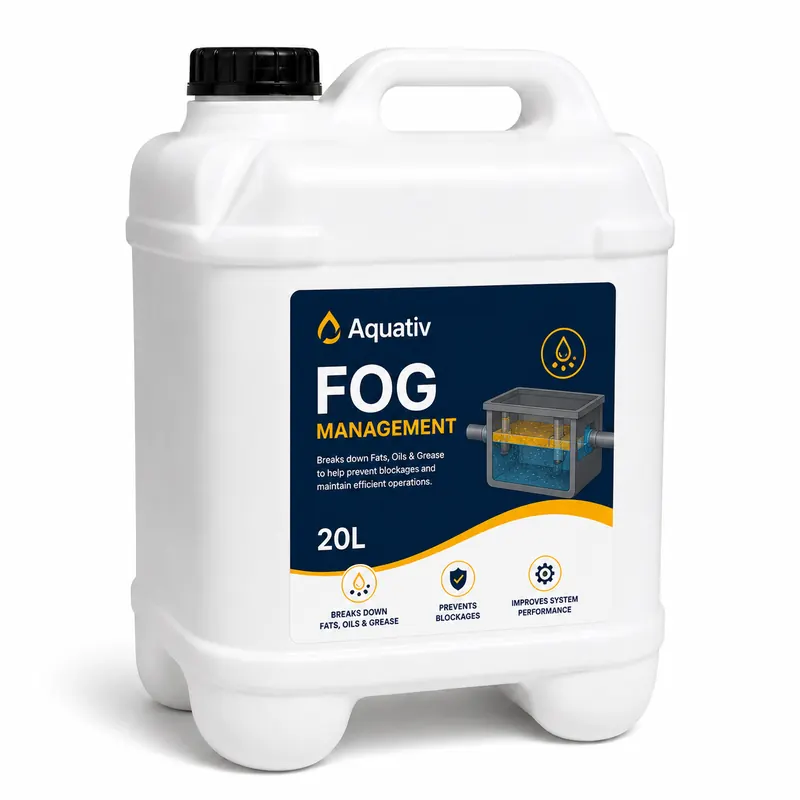
- Grease build-up at lift stations
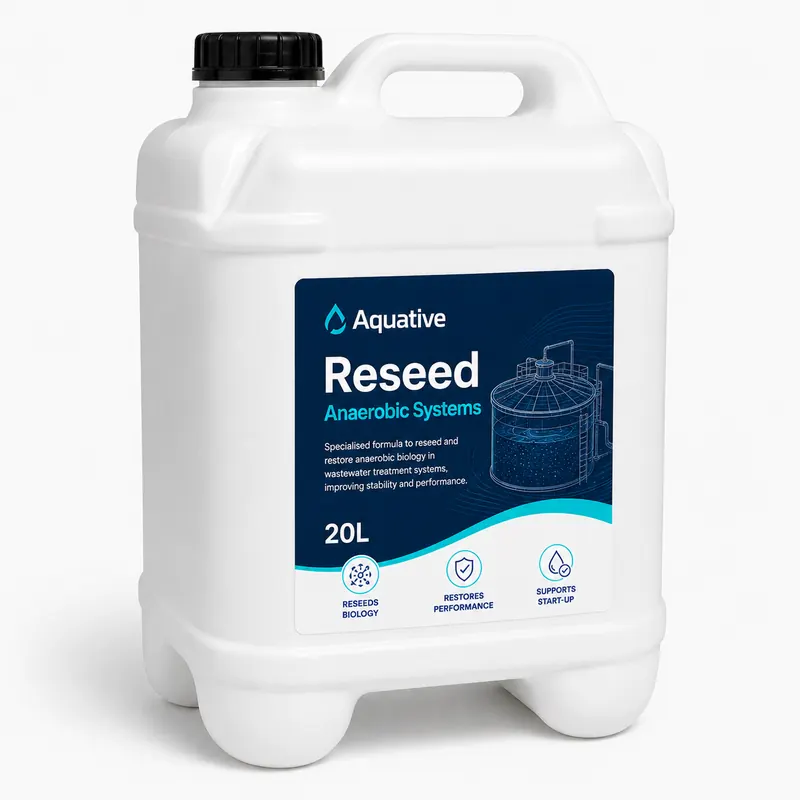
- Anaerobic lagoons needing biological support
Our approach
- Continuous low-dose programs at key wet wells
- Targeted FOG-active dosing on grease-heavy lines
- Reseeding programs for stressed anaerobic assets
What good looks like
- Fewer odour complaints from the network
- Reduced grease-related blockages at lift stations
- Healthier anaerobic lagoon performance
How it works
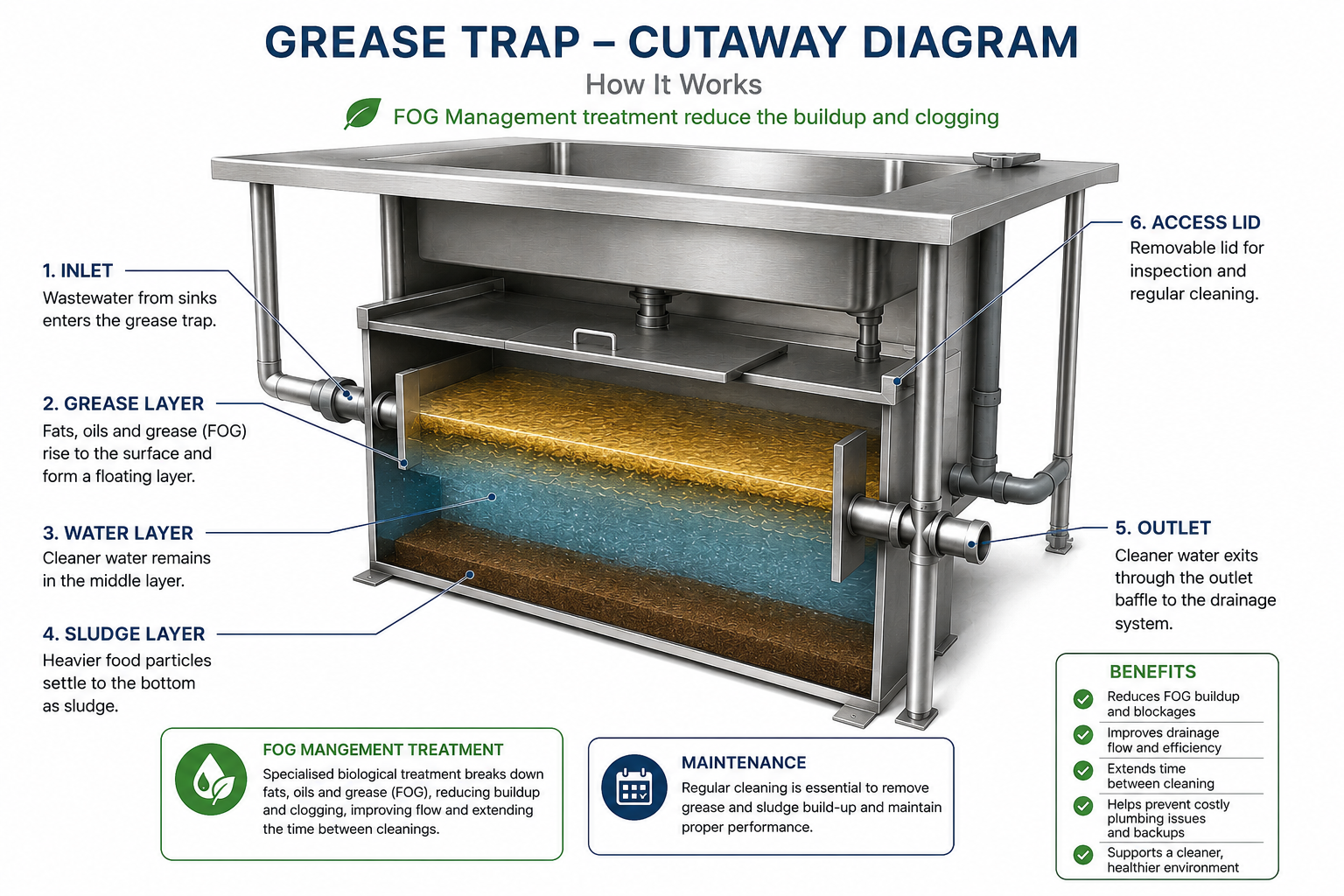
Inside a grease trap: where biology does the work.
A grease trap separates fats, oils and grease (FOG) from wastewater by letting solids settle and FOG float, so cleaner water can pass through to the drainage system. Biological dosing works on the FOG and sludge layers between pump-outs, slowing build-up and keeping the trap operating closer to design.
Matched products
View all industrial products Products fit for this application.
Each product below is selected based on the system type and load profile for councils and water utilities.
Other industrial solutions.
Food and beverage processors
Dairy, brewing, beverage and food manufacturing with high BOD/COD streams.
Read moreAbattoirs and rendering
Sites with FOG, protein and odour-intensive loads requiring targeted biology.
Read moreTrade waste discharges
Programs to support compliance with trade waste agreements.
Read moreNeed a treatment program that fits your site?
Tell us about your application and we'll match the right biological program.