
Grease Trap Treatment
Biological FOG Control for Australian Kitchens
Pumping out a grease trap removes the grease. It does not stop it coming back. Aquativ doses targeted enzymes and bacteria that digest fats, oils and grease where they form — cutting odour, blockages and pump-out frequency.
Australia-wide support · Response from a wastewater specialist within one business day
Why grease traps keep failing between pump-outs
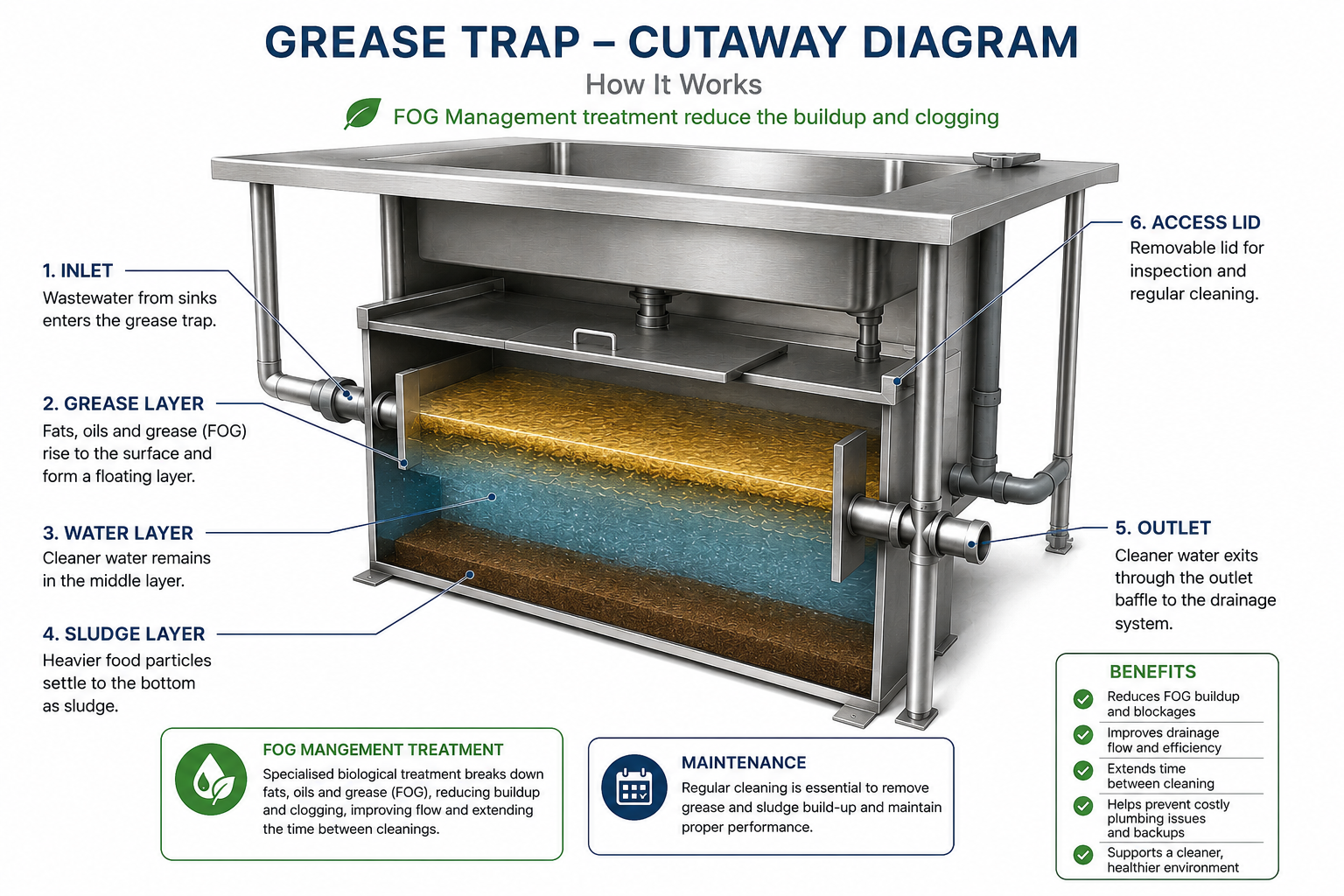
A grease trap is a separator, not a treatment system. Fats, oils and grease float, cool and harden into a cap that keeps thickening until it reaches the outlet. Scheduled pumping resets the trap, but the loading that filled it is unchanged — so the cycle restarts the same day.
Blocked lines and overflows
Hardened FOG narrows outlet pipes until the trap backs up into the kitchen — usually at the worst possible time.
Odour complaints
Trapped grease turns septic, releasing hydrogen sulphide and sour-fat odours through floor wastes and back doors.
Escalating pump-out costs
Pumping removes the grease but not the cause, so the interval shortens and the invoices keep climbing.
Trade waste non-compliance
High FOG in discharge samples puts your trade waste agreement and council approval at risk.
Grease trap cleaning and biological treatment do different jobs
Biological dosing is not a replacement for grease trap cleaning. It changes how quickly the trap refills, which is what actually drives your cost and complaint rate.
| Pump-out only | Biological FOG program | |
|---|---|---|
| What it does | Physically removes accumulated grease | Digests fats, oils and grease into water and CO2 |
| Effect on odour | Temporary relief between visits | Reduces septic conditions that create odour |
| Downstream lines | Untreated — grease keeps building | Biology travels with flow and treats the line |
| Frequency | Interval shortens as loading grows | Daily automated or manual dosing |
| Best use | Removing solids and inert material | Preventing FOG buildup between pump-outs |
How a biological grease trap program is set up
- STEP 01Site and load assessmentTrap size, covers, menu type, litres per day, pump-out history and any trade waste limits.
- STEP 02Program selectionLipase-led enzyme and facultative bacterial blend matched to your grease loading.
- STEP 03Dosing setupTimed overnight dosing at the sink or trap inlet when flow is low and contact time is highest.
- STEP 04StabilisationBiology colonises the trap and downstream lines over the first two to four weeks.
- STEP 05Review and optimiseOdour, blockage events and pump-out interval reviewed, then dose rate tuned.
Enzymes first, bacteria second
Grease is not water soluble, so bacteria cannot consume it directly. The enzyme fraction breaks the fat molecules down first; the bacterial fraction then metabolises the products into water and carbon dioxide. Both have to be present for the trap to actually get lighter.
Lipase activity
Cleaves fats and oils into fatty acids and glycerol the bacteria can consume.
Protease activity
Breaks down meat, dairy and food protein bound into the grease cap.
Amylase activity
Targets starches and carbohydrates from cooking and washdown waste.
Facultative bacteria
Keep working across the variable oxygen conditions inside a grease trap.
Caustic degreasers and emulsifiers only appear to work — they melt grease so it re-solidifies further down the line, moving the blockage out of sight.
What a working FOG program delivers
Venues and facilities we dose
Restaurants and pubs
Cafés and quick service
Hotels and accommodation
Commercial kitchens
Schools and childcare
Facilities and strata
Grease trap treatment questions
Does biological grease trap treatment replace pump-outs?
No. Biological dosing reduces how fast fats, oils and grease accumulate, so pump-out intervals typically extend. Inert solids and non-organic material still need scheduled mechanical removal, and trade waste agreements usually mandate a minimum pump-out frequency.
How long before we notice a difference?
Odour improvement is often noticed within the first one to two weeks. Measurable change in grease cap thickness and pump-out interval generally appears over one to three months as the biology establishes in the trap and downstream lines.
Is it safe for staff and the drainage system?
The programs use non-caustic, non-solvent biological formulations. They contain no harsh acids or degreasers that emulsify grease and push the problem downstream, and they do not attack pipework, concrete or trap fittings.
Will it work with an automated dosing pump?
Yes. Most commercial kitchens run a timed dosing pump set to release overnight when flow is low. Manual dosing at the sink also works for smaller venues and low-volume traps.
What size grease traps can be treated?
Programs are dosed by daily grease loading rather than trap volume alone, so they suit everything from a small café trap to large multi-tenancy and food-processing installations.