
Odour control in abattoirs and rendering plants
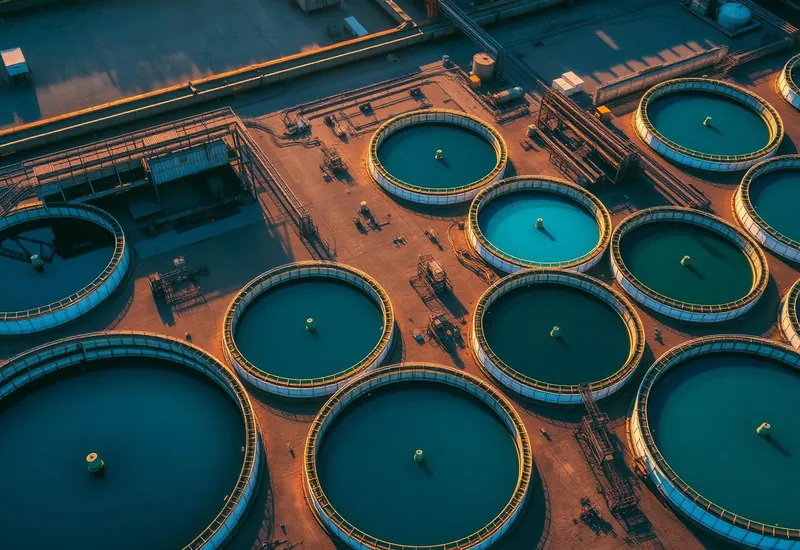
Odour is the most visible community impact of a meat processing or rendering site, and the hardest to make disappear with chemistry alone. Masking agents and oxidisers can suppress the smell at the boundary for a shift or two, but the underlying biology continues producing the offending compounds. Durable odour control starts inside the process, not at the fence line.
The chemistry behind the complaint
Most nuisance odour from protein processing sites is driven by two pathways. Sulphate-reducing bacteria convert sulphate and sulphur-containing amino acids to hydrogen sulphide under anaerobic conditions, producing the rotten-egg smell that travels furthest. In parallel, fermentative organisms break down proteins and fats into volatile fatty acids, amines and mercaptans, producing the more complex, putrid character that residents describe as 'rendering smell'.
Both pathways are accelerated by warm temperatures, stagnant zones, and accumulated organic solids - which describes the conditions inside most lairage drains, blood collection lines, paunch handling areas and DAF underflows.
Why masking and oxidising agents struggle
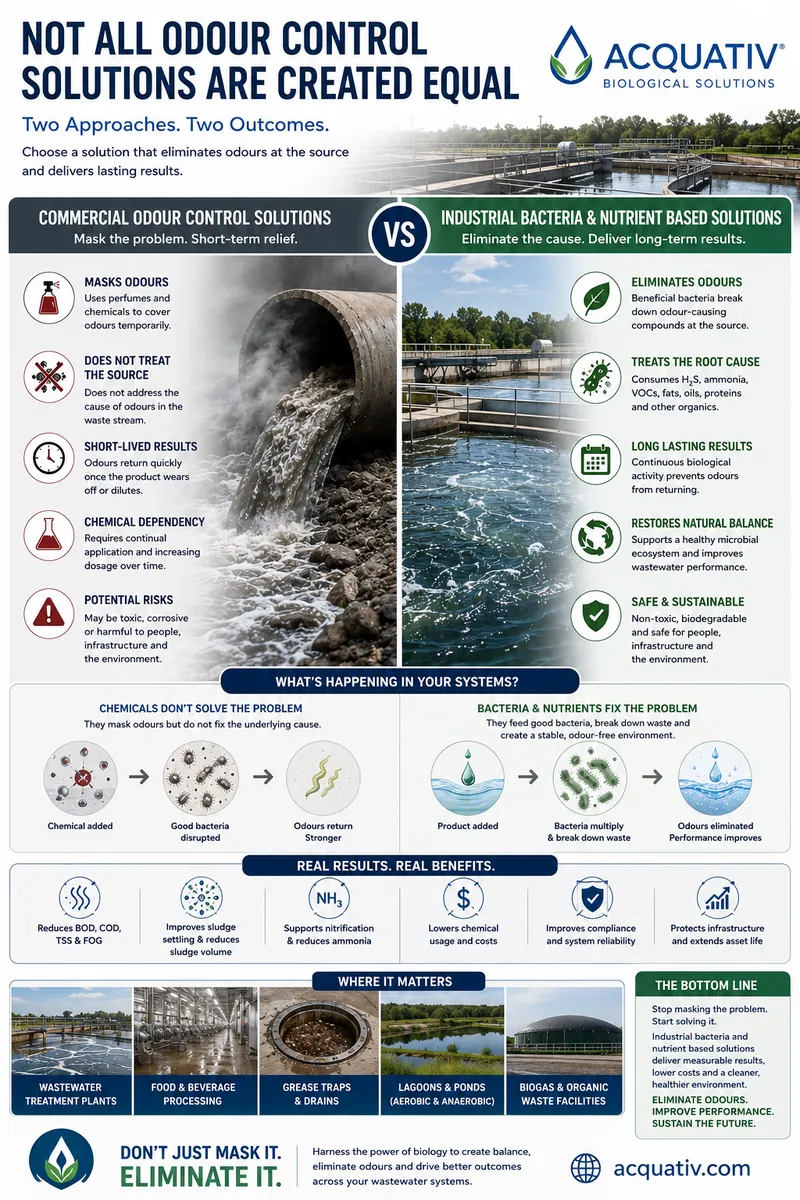
Perfumes and masking agents work on perception, not on the underlying compounds. They reduce the unpleasantness of the smell for a short period and at significant ongoing cost, but they do not change what is being produced.
Strong oxidisers such as hypochlorite or hydrogen peroxide do destroy odorous compounds, but they also damage the beneficial biology in downstream treatment systems, are hazardous to handle, and require continuous dosing because they do nothing to slow the production rate at source.
What biological odour control changes
Biological odour control targets the production side of the equation. Selected aerobic and facultative organisms are introduced into the drains, sumps and balance tanks where odour generation begins. They out-compete the sulphate reducers and fermenters for substrate, shift the local environment away from the strictly anaerobic conditions those organisms need, and metabolise the volatile precursors before they leave solution.
- Lairage and bleeding area drains, where blood and tissue solids accumulate.
- Paunch and offal handling lines, where protein breakdown is most intense.
- DAF underflow tanks and balance pits, which are often the dominant point source.
- Anaerobic lagoons and covered ponds, where surface emissions can be reduced with targeted dosing of the inlet zone.
Designing a program that holds up
A credible program starts with a walk of the site at the worst time of day - typically late afternoon in summer - to identify the dominant point sources. Dosing is then concentrated at those sources rather than spread thinly across the site. Dose rates are tied to throughput, not calendar, so the program scales with production.
Operators should expect a measurable change within two to four weeks, with the largest gains at the boundary appearing once the upstream point sources have stabilised. Complaint logs are the honest scorecard. If they do not move, the program is wrong.
Working alongside engineering controls
Biological dosing is not a substitute for covering open tanks, capturing high-strength streams, or fixing ventilation. It works best as part of an integrated program where engineering reduces the emission pathways and biology reduces the generation rate. Done together, the two approaches typically achieve more than either does alone, at a lower running cost than continuous chemical dosing.
Related Aquativ solutions
Explore the programs behind the field notes above.
Product range
Biological programs for home, commercial and industrial systems.
ExploreAll wastewater sectors
Eight sectors, from septic to abattoir and municipal plants.
ExploreIn-situ desludging
Microbial plug programs for aerobic and anaerobic lagoons.
ExploreGrease trap treatment
Biological FOG control for kitchens and food venues.
Explore